Column · @franciscopmjd936
ADA Mobile Toilet Rental: What Counts as an Accessible Device?
When people ask about an ADA mobile commode rental, they are typically really asking 2 concerns simultaneously. Initially, what does the legislation require? Second, what does authentic access appear like in the real world, when the restroom is being provided to a jobsite, event, church fair, park, or personal event?
Those are not constantly the exact same conversation, but they should be. A device can be identified as easily accessible and still create troubles if it is placed in mud, blocked by a curb, or squeezed right into a corner where a mobility device individual can not approach the door. On the other hand, some purchasers and event planners think that any type of bigger mobile restroom counts as compliant, which is not how accessibility functions either.
The regulating government standard in the United States is the 2010 ADA Standards for Accessible Style, as analyzed by the Accessibility Board and the Department of Justice. That issues because "obtainable" is not a vague advertising term. If you are setting up an ada mobile toilet service, you are taking care of details access policies that cover the system itself, the entrance, the path to it, and the standard clearances an individual requires to use it.
The first point to understand: larger is not the same as accessible
I have seen plenty of situations where someone points to an extra-large unit and claims, "That's the ADA one." Occasionally they are right. In some cases they are not. Dimension alone does not clear up the issue.
An ada easily accessible portable washroom needs to do more than offer additional indoor space. The unit needs to fulfill relevant toilet-room technical demands. That includes fixture clearances, transforming room, door maneuvering clearances, and the relevant grab-bar and water-closet clearance policies. It additionally has to have an easily accessible entrance and sit on an available route. If a ramp or landing is needed, that ramp or landing needs to follow ADA technical requirements too.
That is why the expression ada compliant portable toilet suggests something a lot more precise than "roomy." The law is worried about usage, not look. If a person can not approach the device, enter it, maneuver within, and utilize the component with the needed clearances, the fact that the covering looks large from the exterior does not address the problem.
This is additionally where misconceptions begin. Rental customers usually assume that the portable toilet business manages all conformity by delivering the system. In technique, the company can provide an ada compliant mobile toilet, yet the site conditions still matter. A compliant unit went down at an inaccessible place can still create an access failure.
What the ADA is searching for in an obtainable mobile unit
The simplest means to think about an ada mobile toilet is to picture the individual's full path from arrival to exit. The requirements do not concentrate on one separated feature. They check out the whole sequence.
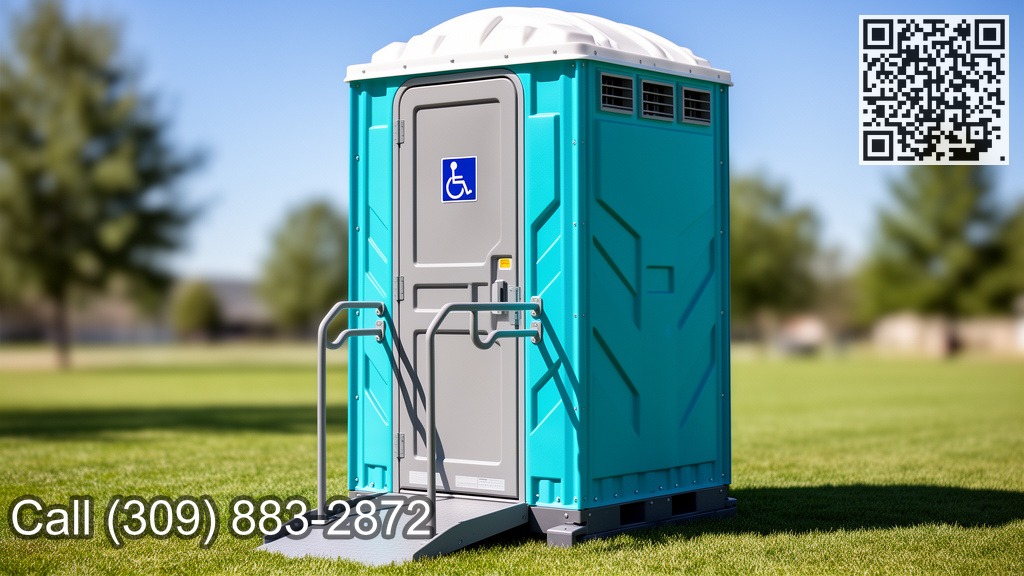
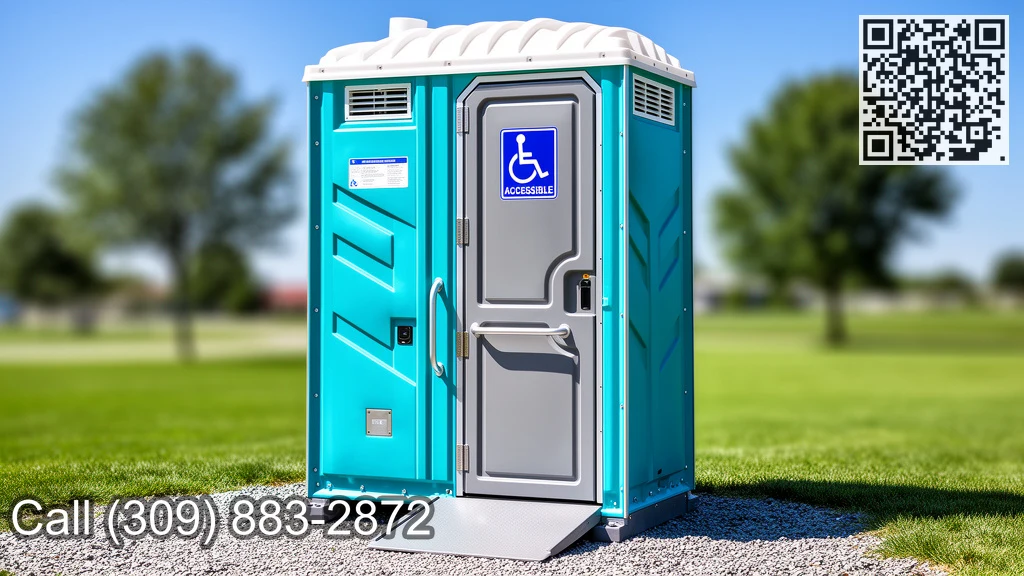
A compliant system must be related to the International Icon of Accessibility. That visual pen is not simply design. It tells users which system is planned to give access, and it aids coordinators reveal that they have actually marked the proper unit.
From there, the unit requires an easily accessible path and an easily accessible entrance. That sounds easy until you see how many short-lived setups obtain it wrong. A restroom placed beyond loosened crushed rock, deep yard, or an unexpected level modification might be literally present yet not meaningfully available. If a ramp or touchdown is part of the configuration, those components have to comply with the ADA technological requirements too. A makeshift board laid over a threshold is not the exact same thing.
Inside the unit, the technical needs matter equally as much. The requirements need transforming room, door navigating clearances, and fixture-related clearances. The grab-bar and water-closet policies likewise apply. Those information exist because access depends on activity. A mobility device individual may need space to turn, align with the component, reach the door, and departure securely. Somebody utilizing a walker or mobility help may also depend on those very same clearances, also if their demands look various from person to person.
That is the sensible heart of an ada certified easily accessible mobile restroom. It is not merely a designated box. It is a usable toilet area in portable form.
How lots of easily accessible units are required?
This is one of one of the most typical rental concerns, specifically for occasion coordinators. The policy from the Accessibility Board is clear for clusters of portable single-user toilet units: at least 5 percent of the devices in each collection have to be accessible. The Gain access to Board has also claimed that this applies even at momentary events.
That point catches individuals off-guard. Momentary does not mean excluded. If you are establishing a bank of mobile bathrooms for a weekend event, the fact that the site will be taken apart on Monday does not remove the ease of access obligation for the cluster.
Because the rule is mounted as "at least 5 percent," planners must stand up to the lure to deal with the need as a bare mathematics workout and absolutely nothing even more. The regulation develops a minimum. Genuine attendance patterns, site design, and distribution throughout a big venue might raise sensible inquiries that surpass the minimum matter. I am not adding new lawful policies there, just mentioning what any individual that has actually functioned a large occasion discovers promptly: one obtainable system placed far from the activity can develop foreseeable hardship, even if a person https://lukaswrts741.pinehavenscope.com/posts/how-many-ada-certified-portable-restrooms-are-called-for-in-a-rental-cluster feels they have checked the box.
If you are renting numerous financial institutions of units in various locations, it is a good idea to believe in terms of each cluster instead of the overall number on the home. The validated conventional especially describes each cluster, which is where blunders typically occur. Someone takes a look at the whole occasion inventory, counts one ada portable bathroom someplace on the premises, and thinks that suffices. The cluster-based regulation claims otherwise.
Temporary occasions are not a complimentary pass
People in some cases mention celebrations, fairs, races, and exterior weddings as though the short-lived nature of the gathering alters the ease of access evaluation. For mobile bathrooms, that assumption can be risky.
The Gain access to Board's assistance makes clear that the 5 percent accessible-unit need for collections applies even at temporary occasions. That implies the brief period of the event does not remove the need for ada certified mobile toilets. If guests are being invited to the website, ease of access needs to be part of the washroom plan initially, not included after the trailers, fencings, and food booths have actually already asserted the degree ground.
In technique, temporary events often create the toughest access problems since the website is constructed swiftly. The course that looked flat throughout a preparation walk may end up being rutted after delivery van cross it. A device positioned on turf might be tougher to come close to after rain. A path that practically exists might come to be obstructed by stanchions, cords, or supplier storage space. None of that alters the governing criterion. It merely reveals why access must be dealt with as an arrangement issue, not just a rental line item.
The accessible route matters as much as the unit
This is where several otherwise sympathetic arrangements fail. A certified ada-compliant mobile bathroom can shed much of its value if the strategy to it is not accessible.
The ADA criteria, as analyzed by the Accessibility Board, need an accessible course and entryway. If you have ever before enjoyed a guest try to reach a mobile toilet across spun dirt or browse around obstacles at a crowded event, you understand why that regulation exists. Access is not just regarding what happens after the door shuts. It starts prior to the user reaches the threshold.
I have actually seen website plans where the restroom service provider did their part and provided the right system, with the correct symbol, but the last placement by others threatened access. The device ended up behind a row of typical commodes, or angled so securely versus a fence that door steering came to be hard, or reached just by a course that tightened during configuration. Those are not little oversights. They directly impact whether the washroom can be used.
For that reason, anybody arranging ada portable bathroom leasing need to consider placement with the very same seriousness they give to count and delivery timing. If a ramp or touchdown is needed, those elements also have to follow ADA technical needs. That is not an information to solve with scraps on the day of the event.
What "identified with the International Symbol of Ease of access" truly means
The symbol demand might appear evident, however it serves an important feature. An easily accessible system needs to be understood the International Icon of Ease Of Access. Without clear identification, users may not know which unit is planned to meet availability needs, especially in a lengthy row of portable bathrooms where all the doors look similar at a glance.
The icon also has an operational worth for personnel and volunteers. On hectic sites, staffs sometimes repurpose, relocate, or block off systems as problems transform. Clear recognition aids prevent the accessible system from being dealt with like any type of various other extra delay. It needs to continue to be available and very easy to find.
There is likewise a depend on problem right here. People that require an ada handicap available portable toilet are frequently required to assess gain access to from a distance before committing to a route. Clear recognition aids them make that judgment promptly, without having to inspect every device in the cluster.
Construction websites have a narrower exception, and it is simple to misunderstand
This component deserves cautious wording because it is often repeated incorrectly.
The ADA requirements identify mobile commode units at construction websites that are utilized exclusively by construction employees. In the pointed out 1991 criterion, those are exempt from the portable-toilet availability scoping demand. That is a narrower factor than many people realize.
It does not imply that all construction-related portable bathrooms are outdoors access rules. It does not imply that basic portable commode rentals are exempt. The verified context particularly claims that for general mobile toilet leasings, the accessible-unit need remains.
In simple language, you need to be cautious about thinking that "it's a construction website" answers the inquiry. The exemption described below is linked to mobile toilet devices used specifically by building workers, and the source context is specific. Beyond that, it is ideal not to make assumptions.
Marketing language can blur the picture
The mobile sanitation market makes use of a mix of expressions, some a lot more specific than others. You will certainly see advertisements for an ada portable toilet, an ada certified portable toilet, ada certified mobile bathrooms, or ada-compliant mobile restrooms. Those terms might all be pointing towards the same basic idea, but the lawful issue is not the wording in the ad. It is whether the system and its installment satisfy the regulating requirements.
That is why it helps to ask useful concerns rather than depending on tags alone. Does the system have the called for ease of access recognition? Does it give the required clearances and transforming area? Is the entrance available? Will certainly the path to the device continue to be accessible after shipment, secure fencing, and crowd control remain in place?
A supplier may seriously define a system as ADA accessible since it is their bigger model. That may still leave essential questions unanswered. The exact same is true of the expression ada-compliant mobile bathroom. It seems conclusive, however compliance depends on both the unit and the means it is set up on site.
A short rental-side reality check
When clients are trying to prevent blunders, I typically inform them to stop prior to shipment and validate a few essentials. This conserves even more trouble than trying to rearrange devices once the website is active.
- Ask the number of units remain in each collection, not just the complete order.
- Confirm which device is the available one and that it will bring the International Symbol of Accessibility.
- Walk the designated route before placement, specifically if the ground problem may change.
- Check whether the entryway, and any type of needed ramp or touchdown, will certainly satisfy ADA technological requirements.
- Recheck gain access to after the rest of the website aspects are installed.
That is a short list, however it covers the failings I see usually. None of it is glamorous, and all of it matters.
Why people obtain floundered on "compliance"
Part of the complication originates from how people make use of the word "conformity" in daily speech. They usually imply, "Did we buy the right product?" The ADA criteria ask a wider question: "Can an individual with a disability actually use it under the problems supplied?"
That is why an ada compliant mobile washroom is never simply a product option. It is additionally a placement decision. It is course planning. It is crowd management. It is seeing to it the device stays identifiable and reachable as soon as the rest of the site fills in around it.
The wider enforcement environment likewise matters. Access is not fading into the history. The Division of Justice's April 2026 support prolonging the target date for sure state and local government internet and mobile access rules to April 26, 2027 for larger entities is not concerning portable toilets particularly, yet it does reflect something vital: ADA conformity stays energetic, noticeable, and quite component of how companies are expected to operate. Simply put, accessibility is not an old box to examine and fail to remember. It is a continuing duty across settings.
That wider environment ought to urge far better habits on the ground. If an organization is paying attention to digital accessibility, public gain access to, and physical holiday accommodations somewhere else, then restroom access at a temporary occasion or public-facing site need to be treated with the exact same seriousness.
Common edge instances that deserve actual thought
The ADA standards provide the framework, but genuine websites create judgment phone calls. A sloped area may technically supply sufficient open area for restroom positioning, yet still complicate the easily accessible course. A parking area might be close to the commode collection yet broken up by momentary obstacles. A big place might satisfy the minimal accessible-unit count overall while still leaving one cluster without access where people in fact gather.
These are not debates against the requirement. They are pointers that the standard needs cautious application.
One example that turns up frequently is the "final step." A system is supplied to a level location, then changed later on to include a phase extension, providing outdoor tents, or equipment drop. The relocation seems minor to the team guiding traffic, yet it can influence maneuvering clearances or the route to the entrance. Another example is the "climate change." A route that was convenient at configuration comes to be tough after rain. Momentary sites are dynamic, which is why access needs to be kept track of, not merely created on paper.
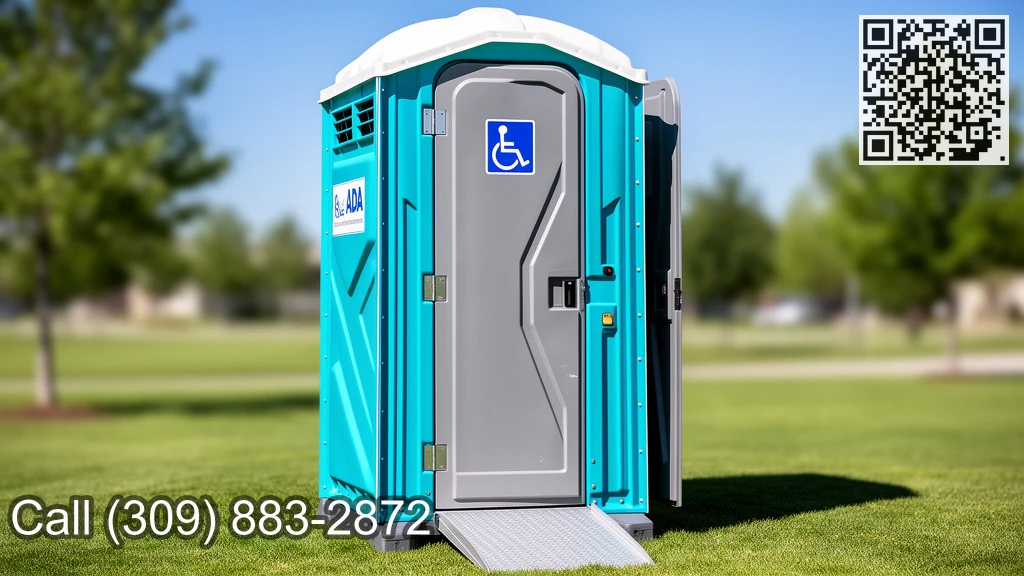
The expression ada portable toilet requirements can sound dry, but behind it are day-to-day acts of planning and regard. It means planning ahead so a visitor, participant, worker, or visitor is not left improvisating with dignity on the line.
When one accessible device is not enough in practice
The lawful minimum for collections is one point. Practical adequacy can be an additional. Without inventing added legal guidelines, it is still fair to claim that relying upon a single available device for a big or commonly spread occasion can produce stress factors. If that a person unit is occupied, inactive, or difficult to get to from essential locations, the user bears the burden.
That is where knowledgeable organizers show judgment. They do not just ask, "What is the least we can do and still count as compliant?" They ask, "Will this configuration in fact work for the people coming right here?" That way of thinking has a tendency to create better results throughout the board.
It also lowers friction during the event. Staff spend less time handling problems, rerouting visitors, or attempting to deal with positioning after the reality. Much more notably, attendees with specials needs can browse the website with much less uncertainty. That is usually the difference in between being practically included and really welcomed.
What to keep in mind when you listen to "ADA system"
If a person supplies you an ada certified mobile commode, do not stop at the label. Think through the whole photo. The device needs to be related to the International Symbol of Availability. It has to have an easily accessible course and entry. Any type of needed ramps or touchdowns should follow ADA technical requirements. The interior has to meet the applicable technological policies for transforming area, maneuvering clearances, fixture clearances, and grab-bar and water-closet clearances. And if the system belongs to a collection of portable single-user bathrooms, a minimum of 5 percent of that collection need to be accessible, also at a short-lived event.
That may seem like a great deal to track, however the underlying idea is straightforward. An obtainable portable restroom is one that a person can discover, reach, enter, utilize, and leave with the clearances and includes the ADA needs. Not just on paper, and not simply in the vendor description, however in the real area where it is rented and used.
For any individual arranging an ada portable commode rental, that is the common worth keeping. Access is not a politeness upgrade. It belongs to making the website usable for everyone that is indicated to be there.
 Ask ChatGPT
 Ask Grok
 Ask Perplexity
 Ask Claude
 Ask Google AI
 Ask You